Summary
Fattal Hotels, a subsidiary of the Fattal Group with over 120 years of diversified business experience, made its United States hospitality market debut in 2023 through the acquisition of The Blakely Hotel, a historic 117-room property in Midtown Manhattan. This move represents a significant strategic shift for the group, marking its first hotel investment in North America and the adoption of a bold, asset-heavy business model that emphasizes direct ownership and operation of hotel properties rather than franchising. With a portfolio of over 315 hotels globally, Fattal’s entry into the U.S. market is aligned with its broader goal of international expansion and greater control over its value chain.
Fattal’s asset-heavy strategy contrasts with the prevalent asset-light models favored by many large hotel operators, aiming to maximize profitability by capturing full upside from property improvements and reducing dependency on third-party distribution fees. Under CEO Ronen Nissenbaum, the company pursues cluster-by-cluster growth, targeting 400 to 450 hotels in the U.S. by 2030, focusing on major urban centers such as New York, Washington, D.C., Miami, Orlando, and Chicago. This approach grants operational flexibility and the ability to adapt properties to local contexts while leveraging technology and rigorous staff training to enhance guest experience and operational efficiency.
However, the strategy carries notable risks and challenges. Fattal’s significant leverage—estimated at around $3.9 billion in debt—raises concerns about financial resilience, especially in volatile economic conditions. Additionally, the company faces uncertainties related to transferring its European operational model to the competitive and high-cost New York hotel market, as well as criticisms of its relatively thin single-tier loyalty program, which may limit customer retention and corporate appeal. Industry observers also debate the broader viability of asset-heavy models, cautioning that such approaches require careful alignment with market dynamics and organizational capabilities.
Despite these challenges, Fattal’s entry into the U.S. hotel market is a notable milestone that reflects its confidence in long-term value creation through asset ownership and operational excellence. The company’s owner-operator framework, combined with an emphasis on technological innovation and sustainable growth, positions it to differentiate itself in a highly competitive hospitality landscape while navigating evolving macroeconomic and demographic trends.
Background
Fattal Group, founded in 1897, has amassed over 120 years of experience in distributing products and services across various markets. The business initially began as a modest commission agency before being expanded by the founder’s sons, Michel and Jean, in 1918. Following a relocation of operations to the calmer Sin-el-Fil area of Beirut, the group underwent significant transformation after the passing of Jean Fattal, the group president, in 1979. This postwar period marked a reconstruction and diversification phase, leading to the establishment of Fattal Holding and the launch of initiatives such as the Our Lady of Hope Foundation for Education and Teaching in 1987. Over time, the company pursued a broad geographical and industry diversification strategy to mitigate risks associated with limited market segments.
More recently, Fattal Hotels has emerged as a prominent player in the hospitality sector, operating a portfolio of 315 hotels worldwide that cater to diverse audiences including leisure, business, cultural, and experiential tourism markets. The group emphasizes cultural diversity and intergenerational management, with its operations traded on the Tel Aviv Stock Exchange. A significant portion of Fattal’s clientele hails from North America, making the expansion into the U.S. market a strategic priority aligned with its global growth objectives.
In 2023, Fattal made a decisive move into the United States hospitality market through the acquisition of The Blakely Hotel in Midtown Manhattan. This marked the company’s first hotel investment in North America and represented a bold shift toward an asset-heavy business model, granting Fattal greater control over its hotel assets and value chain. CEO Ronen Nissenbaum highlighted that changing macroeconomic fundamentals, demographic shifts, and efficiencies realized across the existing portfolio made the timing financially viable. Nissenbaum also emphasized the benefits of owning assets directly, including cost savings on distribution fees and autonomy over property improvements, thereby enhancing competitiveness in key markets such as London and now New York City.
Entry into the US Hotel Market
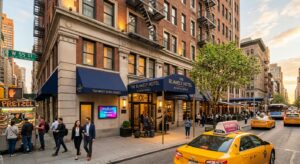
Fattal Hotel Group marked its debut in the United States hospitality market with the strategic acquisition of The Blakely Hotel, a 117-room pre-war property located on West 55th Street in Midtown Manhattan. This purchase, valued at approximately $38.5 million, represents the company’s first investment in North America and signals a deliberate expansion beyond its established European operations. The Blakely Hotel, which features 42 suites and sits within walking distance of Central Park, Times Square, and Fifth Avenue, aligns with Fattal’s approach of preserving historic structures while modernizing and adapting properties to their local context.
Under the leadership of Ronen Nissenbaum, CEO for Western Europe at Fattal Hotels and Leonardo Hotels, the group pursues an “unapologetically asset-heavy” strategy that emphasizes direct ownership of hotel properties rather than franchising. This model aims to maximize profitability by controlling the entire value chain, allowing for rapid market entry and operational flexibility amidst economic and geopolitical uncertainties. Nissenbaum has articulated plans for a cluster-by-cluster expansion in the U.S., targeting a portfolio of 400 to 450 hotels by 2030, leveraging the owner-operator model to capture full upside from property improvements and superior revenue generation index (RGI) performance.
Despite the potential benefits, the strategy carries risks including significant debt—estimated at around $3.9 billion—and challenges associated with developing a thin single-tier loyalty program alongside navigating the untested economics of the New York hotel market. Nevertheless, Fattal’s entry into the U.S. market via the Blakely Hotel acquisition reflects a bold and calculated move to establish a foothold in one of the world’s most competitive hospitality landscapes, complementing its longstanding history and successful partnerships in other regions.
Asset-Heavy Strategy
Fattal Hotels has adopted an unapologetically asset-heavy strategy as it makes its debut in the US hotel market, emphasizing direct ownership of physical properties to maintain full control over the guest experience and operational decisions. This approach contrasts with the more common asset-light model favored by many domestic hospitality giants, which typically focus on franchising to minimize risk.
By owning and operating their hotels, Fattal aims to leverage superior revenue generation index (RGI) performance and capture the full upside of property improvements without external constraints. Ronen Nissenbaum highlighted that the asset-heavy model allows rapid market entry and greater control over the company’s value chain and destiny, particularly valuable amid unstable geopolitical and economic conditions. Nissenbaum further noted the strategic flexibility this ownership model provides, allowing the company to respond pragmatically to evolving market opportunities, such as focusing investments on cities like New York, Washington, D.C., Orlando, Miami, and Chicago.
The asset-heavy strategy also facilitates cost savings by reducing reliance on third-party distribution channels, which Nissenbaum estimates saves approximately 15%, enabling competitive pricing and enhanced profitability. Furthermore, Fattal’s owner-operator model allows the company to execute property improvements without external approval delays, thus accelerating value creation. This stands in contrast to asset-light models, where management companies or franchisors often dictate renovation schedules and standards.
Despite its advantages, the strategy carries inherent risks, including a significant debt load—approximately $3.9 billion—and uncertainties linked to new markets like New York. Nevertheless, Fattal remains confident that its control over assets and operational agility will generate alpha returns and long-term value. The company’s approach exemplifies a contrarian investment philosophy, focusing on markets others may overlook or deem challenging at present.
Industry discussions underscore that while the asset-heavy model demands substantial capital and entails higher risk, it offers unmatched control, flexibility, and potential for differentiation, particularly in volatile economic environments. Fattal Hotels’ strategic choice reflects a belief that full ownership enables them to optimize both financial outcomes and guest satisfaction, balancing profitability goals with service excellence in an increasingly technology-driven hospitality landscape.
Operational Implementation
Fattal Hotel Group’s operational implementation in the United States revolves around a comprehensive strategy of property acquisition, renovation, and brand repositioning, combined with a strong emphasis on responsible management and staff development. Following the acquisition of the historic Blakely Hotel in Manhattan, the property will undergo extensive renovations and is expected to reopen in mid-2027 under one of Fattal’s existing hotel brands, marking the Group’s entry into the U.S. market and reflecting its approach of acquiring well-located urban assets with significant value creation potential through refurbishment and rebranding.
The Group’s operating model is guided by fundamental principles that treat every hotel as an integral part of its larger portfolio, fostering a consistent commitment to quality and service akin to “every hotel being a room in Fattal’s mansion”. Unlike standardized global rollouts, Fattal adapts its properties to local architectural styles, neighborhood character, and cultural context, especially in cities with historic hotels like New York. This approach emphasizes preservation and modernization rather than demolition, ensuring that the property’s heritage is respected while elevating guest experience through brand standards.
A critical component of operational success lies in the integration of technology and rigorous staff training. Modern hotels under Fattal rely heavily on Property Management Systems (PMS), Point of Sale (POS) systems, guest communication platforms, and revenue management tools. Employees receive job-specific training designed to equip them with the necessary skills to perform daily operational tasks efficiently, including front desk procedures, housekeeping protocols, and food and beverage service standards. This training is ongoing, with continuous assessment and refresher sessions to maintain high performance and adapt to procedural changes. Cross-training is also employed to increase workforce flexibility and operational resilience.
To ensure quality and safety standards, audit findings and corrective actions are tracked systematically, providing transparency and a clear overview of each hotel’s operational compliance. The Group’s Human Resources Department plays a pivotal role by centralizing recruitment efforts, promoting geographic and cross-business mobility within the Group, and supporting employee career development to build a skilled and adaptable workforce.
Asset managers contribute to operational implementation by collaborating closely with brand representatives, owners, and operators to optimize contractual relationships and enhance the guest experience. Their responsibilities include developing marketing plans, staff training programs, amenity and facility improvements, and overseeing property improvement plans (PIPs). This collaboration ensures alignment of brand standards with operational goals to maximize guest satisfaction and loyalty.
Finally, Fattal places strong emphasis on data privacy and security, adhering to detailed policies governing the lawful collection, use, and sharing of guest and employee information for legitimate business purposes only. This focus on responsible data management supports both operational integrity and customer trust.
Competitive Advantages and Market Positioning
Fattal Hotels’ entry into the United States market is underpinned by a deliberate asset-heavy strategy that distinguishes it from many domestic hospitality giants who favor franchising and asset-light models. By owning both the physical properties and the brand, Fattal maintains absolute control over the guest experience and operational decisions, allowing the company to capture the full upside of property improvements without sharing revenue through franchise fees, which typically range from 10 to 15% of revenue for franchisees.
This owner-operator model supports superior Revenue Generation Index (RGI) performance, as Fattal leverages its comprehensive control to optimize operational efficiencies and guest satisfaction. The company’s approach also aligns with its long-term investment philosophy, emphasizing belief in the market and asset ownership as key to generating alpha returns. While this strategy carries inherent risks, including significant debt levels—approximately $3.9 billion—and challenges linked to a relatively thin loyalty program and the complexities of the New York market, Fattal’s leadership remains confident that the benefits outweigh the risks.
The group’s expansion plans, targeting 400 to 450 hotels by 2030, focus on cluster-by-cluster growth to maximize operational synergies and market penetration. This strategy is supported by Fattal’s strong operational performance in Europe, where it holds a market share of about 12%, achieves an EBITDA margin of 18.5%, and realizes RevPAR growth of 7% in 2024, demonstrating efficient cost structures and effective revenue management. The ability to integrate technology and streamline operations across owned assets further strengthens its competitive positioning.
Entering the U.S. market marks a landmark moment for Fattal Hotels, signaling a major strategic step in its international growth trajectory. CEO Ronen Nissenbaum highlights that evolving macroeconomic fundamentals, demographic shifts, and operational efficiencies have made the U.S. market viable for their asset-heavy model in 2023 after years of evaluation. This move reflects a commitment to long-term value creation through hands-on ownership and operational excellence rather than short-term financial gains from asset-light strategies.
Financial Performance and Investment
Fattal Holdings has demonstrated strong financial performance across its operational segments, particularly in its Israeli operations, which reported substantial revenues for the year ending December 31, 2023, highlighting a robust domestic market presence. The company’s profitability is influenced by various financial ratios, including return on assets and return on equity, which reflect the effectiveness of revenue generation, inventory management, operational efficiency, and cost control within its hotel portfolio.
Investment strategies within the hospitality sector continue to attract significant capital, with sovereign funds maintaining heavy allocations as limited partners in flagship funds. This trend ensures that global capital flows into the hospitality space remain steady, supporting the expansion and acquisition activities of groups like Fattal. For instance, Fattal Hotels group has established a partnership involving Menora Mivtachim, Harel Insurance, Leumi Partners, and Fattal Properties, collectively investing over €300 million in a fund aimed at purchasing hotels in Europe. This venture is expected to expand to approximately €400 million, enabling future acquisitions exceeding €1 billion.
Continuing its strategic growth, Fattal is set to enter the U.S. market with plans to renovate and reopen a prime urban property by mid-2027 under one of its established brands. This move exemplifies the company’s focus on acquiring well-located assets with potential for value creation through renovations and brand repositioning. The firm’s investment philosophy also embraces innovative approaches to integrate hospitality features into mixed-use developments and optimize financial outcomes amid economic fluctuations.
Challenges and Criticisms
Fattal Hotels’ asset-heavy expansion strategy in the United States has faced scrutiny due to several significant challenges and risks. A primary concern is the company’s substantial debt load, approximately $3.9 billion, which amounts to five times its EBITDA. This level of leverage raises questions about financial resilience, particularly in the event of an economic downturn. Additionally, the transferability of Fattal’s European lease and ownership economics to the high-cost Manhattan market remains unproven, introducing uncertainty about the model’s success in a new and competitive environment.
The company’s loyalty program, AdvantageCLUB, has also been criticized for its weakness as a single-tier system, which may limit its appeal to corporate accounts and reduce competitive advantage in customer retention and acquisition. From an operational perspective, the industry-wide challenge of managing labor as a strategic asset rather than a cost center is evident in hotel-operated restaurants. Staffing decisions are often driven by strict cost controls rather than being aligned with demand, concept, and guest expectations, potentially undermining service quality and guest satisfaction.
Furthermore, there is an ongoing debate within the hospitality sector regarding the merits of an asset-heavy versus asset-light approach. While asset-heavy ownership grants more control over hotel operations and value chain decisions, critics caution against viewing this approach as a universal solution. Scholars and industry experts emphasize the importance of context-specific strategies, advising against treating the asset-heavy model as a one-size-fits-all remedy. This nuanced perspective highlights the risks of overcommitting to asset-heavy investments without carefully considering market dynamics and organizational capabilities.
Future Outlook
Fattal Hotels is strategically positioning itself for significant growth in the United States, marking a notable shift in its expansion approach. After careful consideration of various markets over time, CEO Ronen Nissenbaum identified 2023 as a pivotal moment where macroeconomic fundamentals, demographic shifts, and enhanced operational efficiencies across its existing portfolio create favorable conditions for entering the U.S. market. The group plans a deliberate cluster-by-cl
The content is provided by Blake Sterling, ZenModeLife