Summary
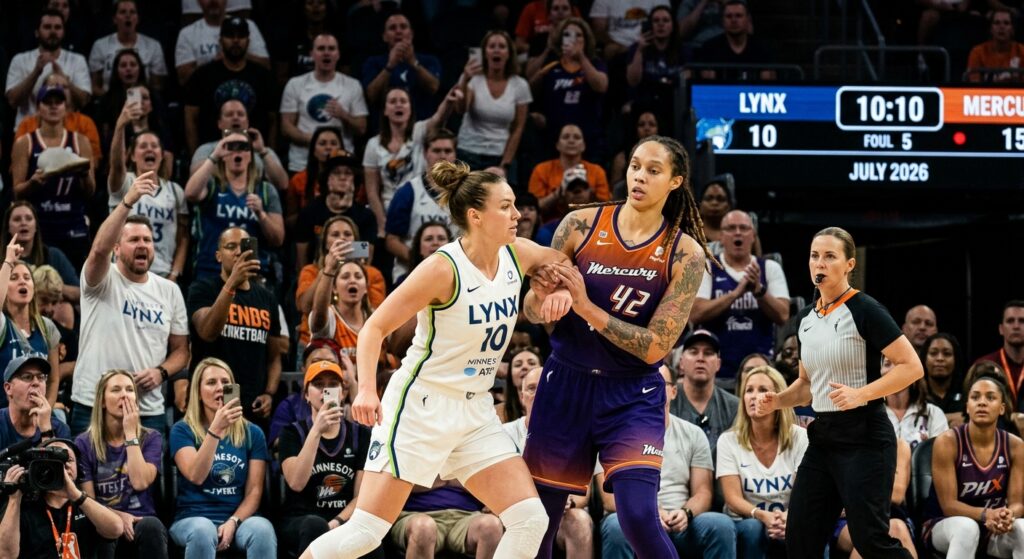
A controversial Flagrant 1 foul by Jessica Shepard during a July 2026 game has intensified discussions around the WNBA’s officiating standards. Shepard elbowed Brittney Griner while contesting a rebound, initially deemed a common foul but later upgraded to Flagrant 1 after a video review. The incident not only overshadowed Shepard’s recent All-Star selection but also raised concerns about player safety and officiating consistency in women’s professional basketball.
Incident Overview
The incident occurred during the game between the Dallas Wings and Atlanta Dream, where Shepard’s contact with Griner led to significant penalties. Griner was subsequently ejected after receiving a second technical foul for arguing with an official. The situation sparked debates about the physical nature of the game and how the league enforces its rules regarding player conduct.
Review Process
Initial calls by officials resulted in a common foul, later upgraded to Flagrant 1 after a review revealed the unnecessary nature of the contact. Such decisions reflect the league’s efforts to uphold player safety while ensuring that officiating remains consistent and fair. The clarity of these rules becomes crucial for players and fans alike, especially when assessing the implications of foul upgrades.
Disciplinary Measures
The WNBA’s disciplinary framework comes under scrutiny when incidents like this occur, particularly regarding the potential for fines and suspensions. Griner’s history of confrontations raises the stakes, leading to discussions about additional penalties beyond a Flagrant 1 designation. The league’s updated Collective Bargaining Agreement suggests that consequences for such conduct may be more severe moving forward.
Public Reactions
Audience reactions to the incident varied, with many expressing dissatisfaction with the officiating and advocating for clearer standards. Analysts emphasized the need for consistent officiating to protect players and maintain competitive integrity. This situation amplified conversations about the overall physicality of women’s basketball and the league’s willingness to adapt its rules as the sport evolves.
Ongoing Challenges
The incident not only highlights Griner’s performance in challenging circumstances but also serves as a case study for the WNBA’s approach to regulating player conduct. With the potential for accumulated foul points leading to suspensions, both Shepard and Griner need to navigate the expectations of discipline and safety going forward. This case illustrates the delicate balance the league must achieve between allowing competitive play and ensuring player welfare and sportsmanship.
Contextual Framework
Flagrant fouls in the WNBA are rare but carry significant consequences, often influencing future gameplay and player eligibility. The league’s ability to review and possibly upgrade fouls post-game illustrates its commitment to addressing player conduct effectively. Understanding these dynamics is essential as the WNBA continues to grapple with enforcing rules while fostering a competitive atmosphere in women’s basketball.
The content is provided by Sawyer Brooks, ZenModeLife