Summary of the Inquiry
The Inquiry into Officers in the Henry Nowak Case examines the conduct of police officers from Hampshire and Isle of Wight Constabulary following Nowak’s death after a stabbing in December 2025. The involvement of officers who handcuffed Nowak while he was critically injured has prompted an independent review by the IOPC, especially after complaints from Nowak’s family. A key concern is whether race influenced the treatment of Nowak compared to his attacker, Vickrum Digwa, who received a life sentence for murder. This situation has ignited a public discourse on policing practices, especially regarding perceptions of racial bias.
Incident Background
Henry Nowak was fatally stabbed by Vickrum Digwa near Highfield House Hotel, an area facing protests over asylum seeker housing. The police response, which included hastily arriving on the scene yet treating Nowak improperly, has raised serious questions about their conduct. Investigators are focusing on whether race influenced the treatment of both Nowak and the assailant, a matter that has added tension to community-police relations amidst national discussions on racial accountability.
Allegations of Misconduct
The IOPC launched an investigation after allegations of police misconduct emerged surrounding the officers involved in Nowak’s case. Initially treated as witnesses, two officers are now subjects of a potential gross misconduct inquiry following family complaints. Key points under review include the handcuffing of Nowak and the assertion that race may have played a role in the police’s actions. This inquiry is not just about accountability; it highlights ongoing debates about perceived biases in policing, reflecting wider societal tensions surrounding race relations.
Investigation Overview
The IOPC’s investigation will encompass the actions of officers and call handlers who responded to the situation. Evidence is being gathered, including body-worn camera footage, to understand better the decisions made at the scene. Investigators are particularly interested in whether the officers’ actions were influenced by the broader community tensions at the time. This scrutiny aims to shed light on police practices and determine if any misconduct occurred that warrants disciplinary action.
Outcomes and Disciplinary Actions
The IOPC will determine if the evidence collected supports any disciplinary actions against the officers involved. While gross misconduct notices have been issued, this does not guarantee formal proceedings; much depends on the investigation’s findings. The inquiry aims to assess police conduct against standards expected in law enforcement and how these actions impact public trust, acknowledging that maintaining confidence is pivotal in community-police relations.
Public and Official Reactions
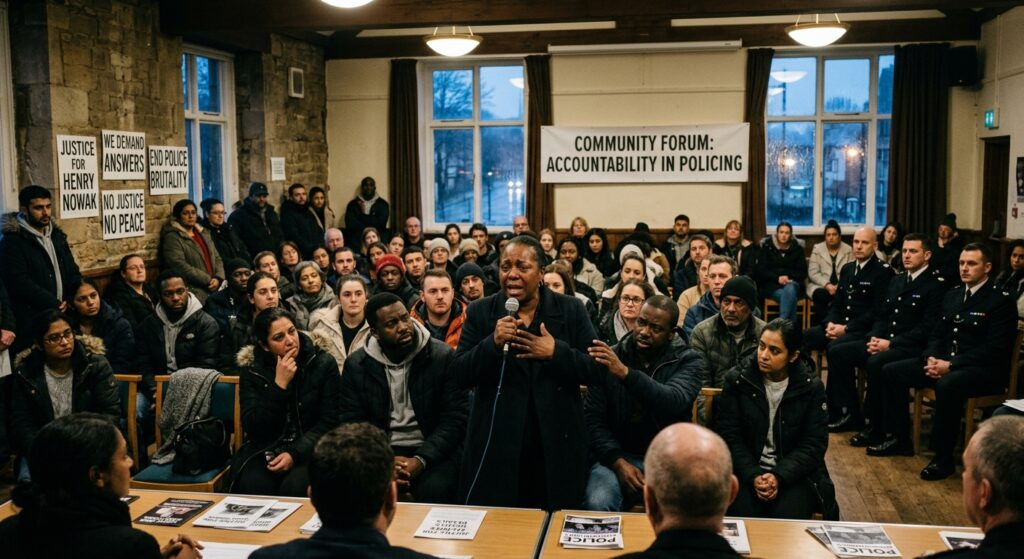
The case has triggered widespread reactions from both the public and police leadership. Following the incident, officers involved were temporarily reassigned, and bodycam footage was released, inciting protests and calls for accountability. High-profile public figures, including politicians and media personalities, have added to the discourse around this case, stressing racial dynamics in policing and questioning systemic biases that may persist in police actions.
Comparative Context and Future Directions
The investigation into Nowak’s death parallels historical cases, like that of Stephen Lawrence, which uncovered issues of institutional racism in policing. Despite reforms, the persistence of misconduct allegations suggests that systemic issues remain unresolved. Current discussions focus on ensuring that policing policies promote fairness and accountability while addressing public concerns over racial bias. Emphasis on ongoing dialogue about improvement in police practices may foster better community relations and restore public trust in law enforcement.
The content is provided by Dakota Sullivan, ZenModeLife