
Summary
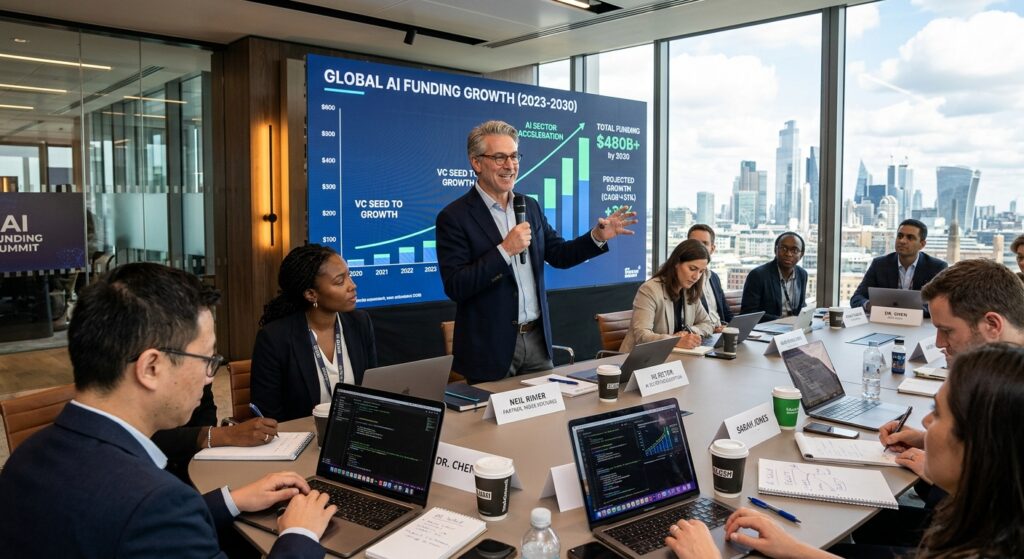
Neil Rimer, co-founder of Index Ventures, anticipates a resurgence in AI funding, driven by increased market confidence and evolving wealth dynamics. His forecast suggests a shift in wealth from a concentrated group of model builders and infrastructure owners to a broader array, including software developers and businesses utilizing AI technologies. This redistribution ties into wider discussions about economic inclusivity, as influential figures like Ray Dalio warn of the risks of reinforcing existing wealth concentration.
Market Dynamics and Predictions
Rimer underscores that AI startups currently capture around 41% of venture capital investments, reflecting growing investor confidence in the sector. Despite this optimism, challenges persist in revenue generation and justifying high valuations, which introduces risks into the investment cycle. Discussions around equitable profit sharing, including proposals for government equity stakes, underline the complexities of wealth distribution in the AI landscape.
Economic and Societal Implications
The shift toward a more diverse ownership structure in AI wealth could broaden economic impacts beyond a select few companies. However, geographical disparities exist; for instance, European startup employees typically hold smaller ownership stakes compared to their U.S. peers. If wealth remains concentrated among founders and early investors, it could limit the broader benefits of AI-driven productivity gains, emphasizing the need for policies that foster inclusive growth.
Challenges in the Current Investment Cycle
Despite the influx of capital, the current AI investment environment faces challenges related to wealth concentration. The dominance of a few firms in AI models and infrastructure raises concerns about equitable ownership of returns. Additionally, disparities in equity stakes and compensation between regions aggravate existing inequalities, calling for more discussions on wealth redistribution mechanisms to ensure a fairer distribution of AI benefits.
Preparing for AI’s Future
Rimer highlights the importance of equitable ownership and workplace adaptability in harnessing the full potential of AI. The market’s optimism, indicated by a high likelihood of reaching significant valuation targets, must align with efforts to ensure that economic gains benefit a wide range of stakeholders. As discussions unfold around policies to facilitate broader ownership, the focus must also include enhancing workforce capabilities to meet the evolving demands of AI technology.
Outlook for AI Investment
The future of AI investment looks promising, with expectations for wealth distribution to support broader economic participation. This shift is vital for ensuring that productivity gains translate into widespread benefits rather than remaining confined to a select group. Rimer’s commitment to fostering diverse opportunities in technology investment signals a strategic approach to addressing both financial performance and societal implications in the rapidly evolving AI landscape.
The content is provided by Emerson Grey, ZenModeLife