Summary
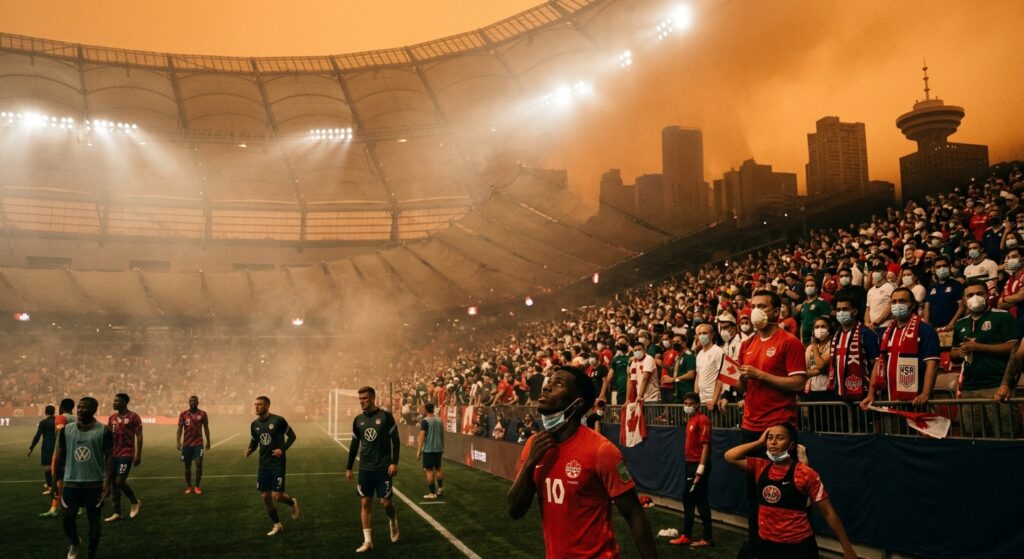
The 2026 FIFA World Cup, hosted in Canada, the U.S., and Mexico, is under threat from wildfire smoke linked to an intense wildfire season in Canada. Thousands of wildfires have burned millions of acres, impacting air quality in major U.S. cities like New York, Chicago, and Detroit. This smoke poses health risks to players, fans, and residents due to the presence of fine particulate matter that can worsen respiratory and cardiovascular conditions during high exertion sports events.
Health officials have issued air quality warnings, and forecasts suggest that approaching weather systems may improve conditions before key matches. However, uncertainties surrounding wildfire behavior complicate health risk mitigation. Currently, FIFA lacks specific contingency plans addressing smoke exposure, raising concerns from health experts about player and fan safety during the event.
Background
The expectation of air quality impacts from the severe 2026 wildfire season in Canada is significant. Across Ontario, Manitoba, and Saskatchewan, thousands of fires have erupted, greatly affecting air quality not only in Canada but also in U.S. states such as Minnesota and Michigan. Prolonged exposure to smoke is particularly hazardous for vulnerable populations, including children, the elderly, and those with pre-existing health conditions, prompting health warnings across affected areas.
Meteorological agencies are closely monitoring the smoke’s spread and using advanced forecasting models to inform public health efforts. However, a coherent strategy to address the expected deterioration in air quality during the World Cup is still lacking.
2026 FIFA World Cup Overview
The World Cup final will occur at the Meadowlands stadium in New Jersey, which poses unique challenges due to anticipated air quality issues from Canadian wildfires. Forecasts regarding air quality before the final remain mixed, and health experts stress the importance of precautionary measures for vulnerable populations during outdoor events.
Activation of air quality protocols and discussions between FIFA and health officials highlight the seriousness of the situation, but concrete measures are yet to be defined, creating uncertainty for both attendees and players. Increasing wildfire activity raises the need for clear protocols to ensure safety amid unpredictable air quality conditions.
Impact of Wildfire Smoke on Air Quality in Host Cities
Host cities for the 2026 World Cup will face severe air quality challenges due to wildfires impacting air across North America. Pollutants from smoke can lead to “unhealthy” air quality levels, which have already prompted health warnings in various regions. Reports of increased respiratory illnesses, particularly in cities like Detroit and Chicago, underline the urgency of addressing these risks as the event approaches.
With projections indicating that poor air quality days will become more common due to climate change, World Cup organizers must account for these factors in planning and public health advisories to protect attendees.
Air Quality Forecasting and Monitoring for the 2026 FIFA World Cup
Air quality forecasting for the World Cup is critical, as significant improvements are predicted due to upcoming rain showers. Various meteorological models and networks gauge smoke dispersion, helping to provide updates on potential health impacts.
Accessible monitoring tools, such as the EPA’s AirNow website, facilitate real-time public awareness of air quality, while sophisticated modeling enhances the accuracy of predictions. Comprehensive monitoring will help guide decision-making for event safety as the tournament draws closer.
Atmospheric and Meteorological Factors Influencing Smoke Dispersion
Smoke’s dispersion during the wildfire season is dependent on atmospheric conditions and wind patterns, complicating air quality management. Strong winds can exacerbate smoke transport, negatively impacting air quality across large regions, including major host cities.
Weather forecasts predicting shifts in atmospheric conditions could provide relief, yet variability remains a concern. The prolonged presence of smoke may enter cities well beyond the wildfire zones, necessitating continuous monitoring and adaptation of strategies for air quality during the tournament.
Projected Wildfire Activity and Smoke Impact in 2026
Wildfire activity in Canada is expected to maintain high intensity through 2026, leading to repetitive challenges regarding air quality and public health during the tournament. Given the rising occurrence of severe wildfires, logistics and health considerations will be paramount for organizers.
Keeping abreast of evolving forecasts and having contingency plans that address potential air quality declines will be critical for ensuring the safety of players and fans throughout the event.
Preparedness and Mitigation Strategies
Preparedness measures are crucial for managing air quality during the World Cup. Air Resource Advisors will oversee smoke assessments, providing vital information for public health planning. Monitoring equipment is ready for deployment to track changes in air quality in real-time during the event.
Health advisories have already begun in anticipation of the World Cup, emphasizing the need for public awareness and protective measures. However, the absence of FIFA’s specific protocols for smoke issues remains a point of concern, suggesting a need for clearer action plans as the event date approaches.
Potential Challenges and Uncertainties
The unpredictability of wildfire smoke’s impact raises significant concerns for the World Cup. Officials have cautioned vulnerable individuals regarding potential health risks, but the lack of a comprehensive contingency plan for air quality is evident. This could lead to challenges in managing player safety and event scheduling due to fluctuating air quality conditions during the tournament.
The ongoing severity of Canadian wildfire seasons further complicates the scenario, bringing to light the need for transparent communication and proactive measures. Establishing clear thresholds and responsive strategies is vital for addressing the public health risks associated with wildfire smoke during the World Cup events.
The content is provided by Reagan Chase, ZenModeLife