
Summary
The Murrell embezzlement scandal revolves around Peter Murrell, the former chief executive of the Scottish National Party (SNP), who confessed to embezzling about £400,000 between 2010 and 2023. Funds intended for a proposed second Scottish independence referendum were allegedly misused for personal expenses through a scheme involving falsified invoices. This ongoing scandal, revealed by Operation Branchform, has significant political consequences, including the unexpected resignation of Nicola Sturgeon as SNP leader in 2023, and raised urgent calls for improved financial oversight within Scottish political institutions.
Background
Allegations surfaced that over £666,000 raised by the SNP since 2017 for the independence campaign was misappropriated. The investigation, known as Operation Branchform, led to Murrell’s 2025 prosecution and Sturgeon’s unexpected resignation in 2023. Concerns about internal controls and the concentration of financial power within the party prompted critiques of the SNP’s governance and emphasized the need for enhanced oversight mechanisms.
Discovery and Investigation
Operation Branchform was initiated in July 2021 after public complaints regarding the SNP’s management of campaign donations. The investigation unveiled long-term financial irregularities, resulting in extensive scrutiny of SNP operations. Police Scotland’s investigation culminated in Murrell’s formal embezzlement charges in April 2024 and his eventual admission of guilt in May 2026, underscoring serious flaws in internal governance and accountability within the SNP.
Key Individuals
Central to the scandal is Peter Murrell, who misappropriated funds for personal use, alongside his wife, Nicola Sturgeon, who was SNP leader at the time. Sturgeon faces scrutiny regarding her awareness of Murrell’s actions, while Colin Beattie, the SNP treasurer, has acknowledged issues concerning financial transparency. The scandal has significantly tarnished the party’s image and electoral prospects, revealing serious implications for those involved and the SNP as a whole.
Embezzlement Methods
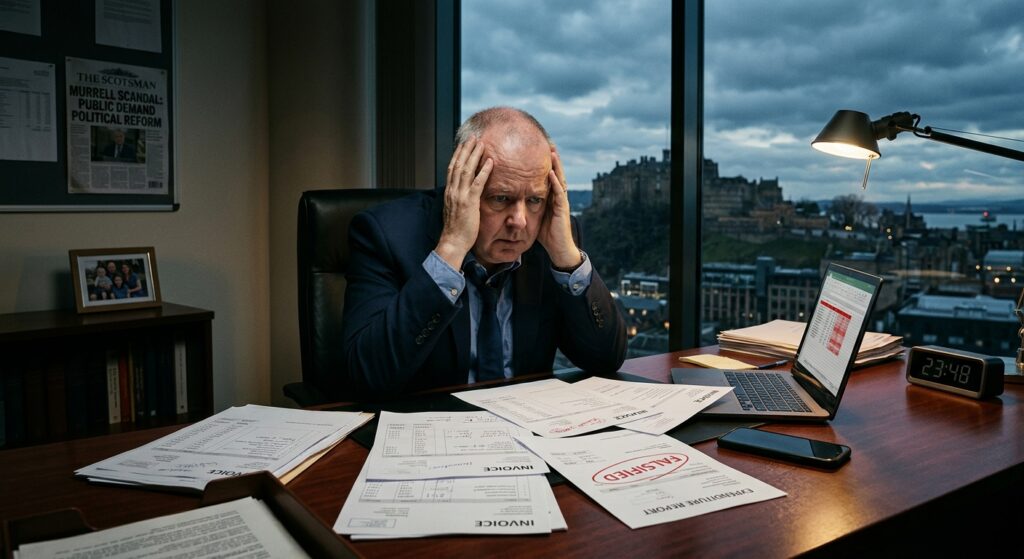
Murrell executed the embezzlement through falsified documents, unauthorized transactions, and misclassified personal expenses as party costs. Notable examples include extravagant purchases, such as a luxury motorhome. The embezzlement highlights a breach of trust and the need for stronger internal controls within the SNP, given Murrell’s significant influence over party finances.
Legal Proceedings
Murrell was charged with multiple counts of embezzlement in April 2024, admitting to stealing £400,000 against the backdrop of delayed court proceedings and public outrage. The legal case reflects the serious nature of financial misconduct in political entities and emphasizes the importance of transparency in party finances.
Political Impact
The scandal has severely affected the SNP’s popularity and public trust, despite its continued governance. The concentration of power within Murrell and Sturgeon’s leadership raised concerns among party members and contributed to calls for reform. Criticism from opposition parties and former allies has intensified, highlighting the need for robust financial oversight to prevent similar issues in the future.
Reforms and Responses
The fallout from the investigation prompted significant discussions about governance within the SNP, with calls for improved oversight and accountability. Responses to the scandal spurred suggestions for changes in the handling of financial practices within the party structure, revealing the potential for future reforms aimed at restoring public confidence. The long-term implications of this scandal remain a focal point in ongoing debates about party governance in Scotland.
Public and Media Reaction
Intense media scrutiny has characterized the reveal of the scandal, with significant implications for the SNP’s public perception. The stark decline in the party’s popularity reflects not only the severity of the allegations but also the ongoing political fallout. The investigation highlighted governance vulnerabilities within the SNP that require careful consideration moving forward.
Timeline Summary
Operation Branchform began in 2021 after significant discontent arose over party fundraising practices, leading to Murrell’s admission of embezzlement in May 2026. The lengthy investigation, encompassing three First Ministers and extensive financial inquiries, has highlighted weaknesses in oversight practices that may have contributed to the misconduct, ultimately impacting the SNP’s public standing and governing effectiveness. Continued scrutiny into ongoing inquiries suggests a broader need for political accountability and transparency.
The content is provided by Emerson Grey, ZenModeLife