Summary
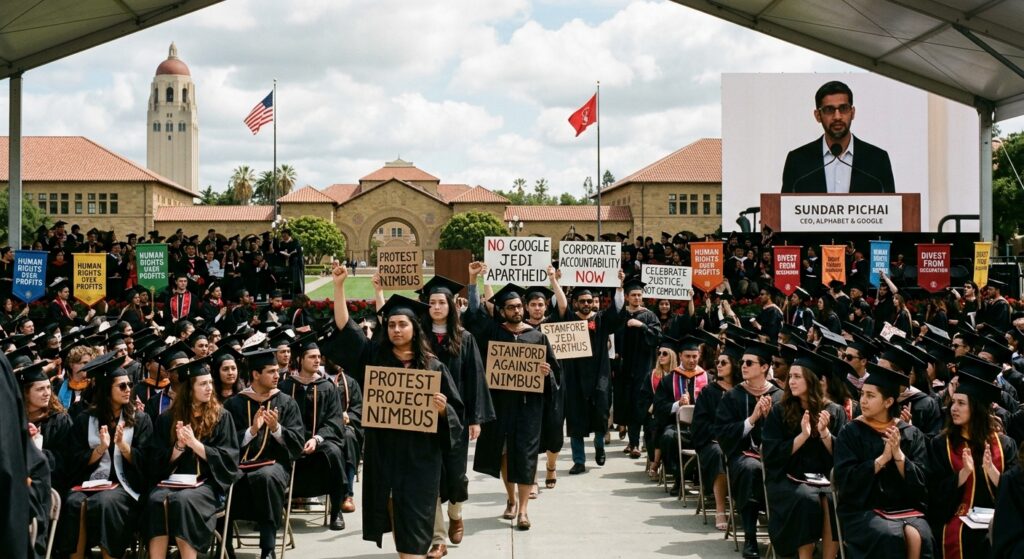
Sundar Pichai’s keynote speech at Stanford’s 2024 commencement sparked controversy focused on Google’s $1.2 billion Project Nimbus, a cloud computing contract with Israel. Critics, including students and employees, argue this technology supports military operations and surveillance in the Israeli-Palestinian conflict. The event was marked by protests, including a notable walkout by hundreds of graduates and an alternative “People’s Commencement,” reflecting deep campus divisions and broader national concerns about corporate accountability in global conflicts.
Event Context
The 2024 commencement exemplified campus polarization amidst political protests against Google’s geopolitical ties, particularly its Project Nimbus contract providing the Israeli military with advanced technologies. Organized protests by Stanford Students for Justice in Palestine framed Google’s involvement as complicit in violence against Palestinians. The backlash included internal dissent among Google employees, further fueling critiques of tech companies’ ethical responsibilities within contested global dynamics.
Graduation Ceremony Highlights
During Stanford’s 135th Commencement at the stadium, sundar Pichai spoke about resilience, yet the atmosphere was tense, with an estimated 200 graduates walking out in objection. This protest highlighted broader concerns about corporate influence in education and AI ethics. The divide was stark during the event, with the traditional celebration contrasted by the parallel “People’s Commencement” advocating for activism and justice.
Protests and Their Motivations
The protests against Pichai centered on Google’s engagement with Project Nimbus, as demonstrators emphasized opposition to military actions and systemic injustices attributed to Israel. Organized by various activist groups, the graduation protests encapsulated a growing critique of corporate ties to oppression, particularly regarding technology’s role in surveillance and military operations. This activism reflects an increasing scrutiny of tech giants amid rising awareness of their societal impacts.
Pichai’s Role During the Event
Pichai’s speech, framed by Stanford President Jonathan Levin’s commendations, was overshadowed by protests where attendees expressed disapproval through boos and a staged walkout. Acknowledging the controversy beneath the surface, Pichai focused solely on celebrating graduates, avoiding any discussion on Google’s political entanglements. His measured response amidst protest highlights the growing scrutiny of corporate leaders at academic events and the tension between celebration and dissent.
Reactions to the Ceremony
Reactions following the event revealed divided sentiments. Praise for Pichai’s leadership contrasted sharply with unwavering commitments from protesters advocating for Palestinian rights. Pichai’s decision to sidestep contentious issues illustrates the complexities tech leaders now navigate in environments charged with political activism, contributing to discussions about the appropriateness of such figures at graduation ceremonies and the balancing act of free speech.
Media Coverage and Public Discourse
The media spotlight on these protests underscored a range of perspectives on Pichai’s presence at Stanford, with similar protests happening across various institutions. Critics framed Google’s role through a human rights lens, while others pointed to perceived ignorance of technological advancements found in AI. This dynamic has ignited conversations surrounding political and ideological diversity within academia, particularly as tech leaders face resistance from increasingly vocal student bodies.
Historical Context of Protests
Stanford’s history of protests during commencements often focuses on geopolitical issues, signaling a strong student voice against perceived injustices. While protests have persisted, they have prompted the university to enhance regulations surrounding demonstrations, emphasizing free speech while maintaining orderly proceedings. This context signifies ongoing challenges around balancing institutional ceremonial significance and the right to political expression, especially regarding technology’s role in global disparities.
Long-Term Implications
The disruption caused by protests at the commencement serves as a reflection of broader societal tensions between student activism and corporate influence, particularly in the tech sector. As awareness grows regarding ethical implications of technology in geopolitical contexts, academic institutions are increasingly becoming arenas for challenging corporate complicity in systemic issues. The sustained nature of these protests suggests a shifting landscape in how tech leaders are received, pointing to an evolving relationship between industry practices and social justice movements.
The content is provided by Emerson Grey, ZenModeLife