
Summary
The agreement between the UK and France aims to reduce illegal migrant crossings in the English Channel by deploying specialized riot police along French beaches. With nearly £500 million invested over three years, the initiative involves enhancing French law enforcement capabilities, including the introduction of riot-trained officers to manage violence during migrant embarkations. The agreement also establishes new surveillance methods and allows interception of boats offshore, emphasizing a performance-based funding model that links financial support to successful interceptions. While the collaboration intends to disrupt smuggling networks, it faces criticism over potential human rights violations and concerns for migrant safety, especially amidst rising political tensions regarding immigration policy.
Crossing Surge and Response
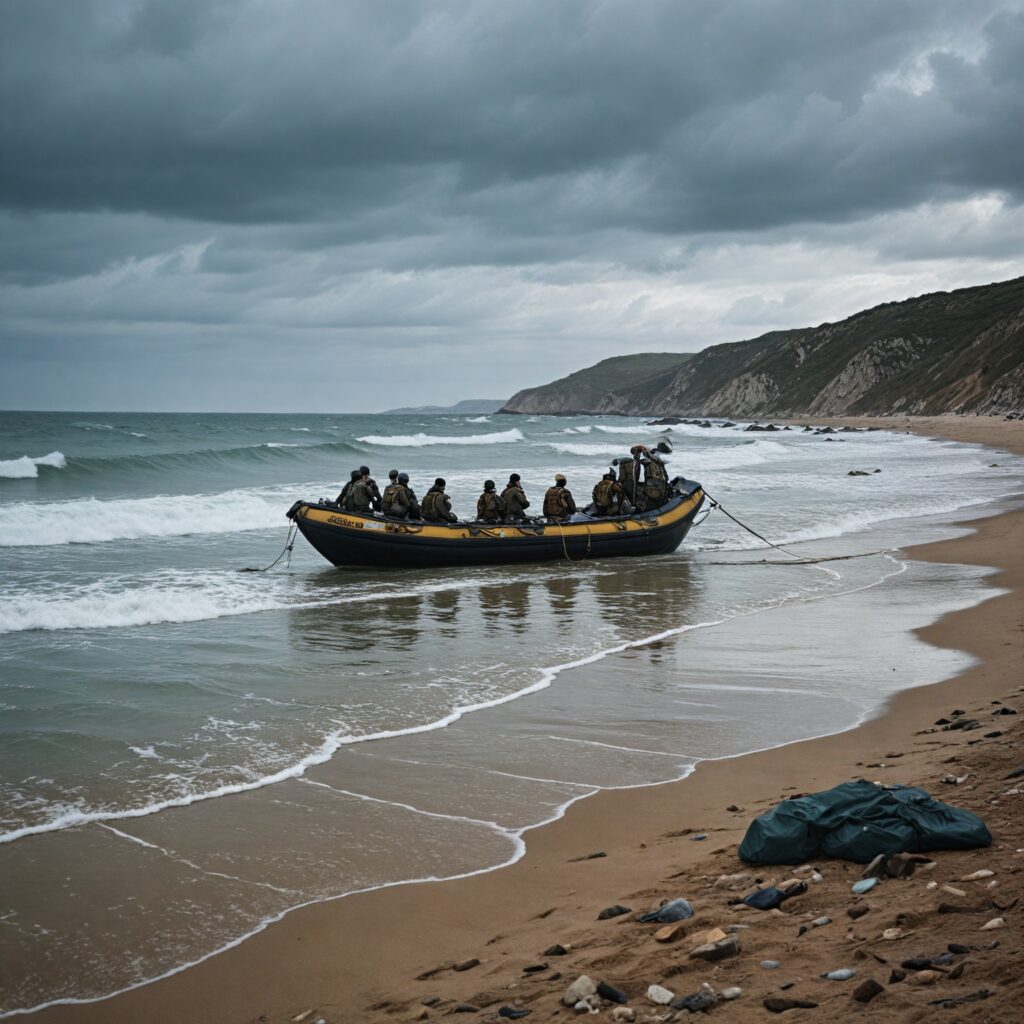
The English Channel has seen a significant rise in migrant crossings, leading to criticism of French enforcement effectiveness. The UK emphasizes the need for stronger measures from France, while French authorities insist that their interventions are already preventing many crossings. Previous agreements have struggled, prompting this latest initiative, which sets substantial targets for reducing migrant arrivals and enhancing intelligence and patrol operations to secure the coast against smuggling activities.
Details of the Agreement
This new agreement commits nearly £500 million to increase the number of French law enforcement officers focused on intercepting boats and enhancing surveillance along the northern coast. It mandates the deployment of 50 riot-trained officers and links funding to measurable successes in reducing migrant arrivals. Those arriving illegally in small boats can be immediately detained and returned to France, while a new detention center is established for processing migrants. However, the enforcement strategies have raised concerns from human rights advocates over potential risks to migrant safety and the prioritization of border control over humanitarian rescues.
Riot Police Deployment
A specialized riot police unit will be deployed to manage crowds and mitigate violence at French beaches frequently used for unauthorized crossings. This represents a historic instance of the UK financially backing riot control measures abroad with a focus on migration issues. Enhanced intelligence operations are set to expand enforcement presence significantly, partnering with existing French units. Critics express concern that heavy-handed tactics may worsen conditions for vulnerable migrants, calling into question the efficacy of policing alone in addressing the migration crisis.
Impacts and Reactions
The deployment of riot police has elicited mixed responses. UK officials view it as a vital move to control illegal crossings and combat organized smuggling. Conversely, French authorities express frustration over perceived shortcomings in their current intervention efforts. Human rights groups caution that escalating enforcement could further jeopardize safety, while public attitudes towards forceful policing are scrutinized in light of recent controversies in France, raising significant implications for civil liberties alongside heightened security measures.
Legal and Political Dimensions
The agreement raises critical legal questions regarding the interception of migrant boats under French maritime law and its adherence to international obligations. It intertwines with ongoing legislative efforts to manage migration more effectively in France while reflecting a shift toward performance-based funding from the UK. Domestically, the increased presence of riot police may intensify social unrest, especially in economically struggling communities, challenging the narrative that stronger policing is a comprehensive solution to the underlying migration issues.
Media Perspective
Media coverage surrounding the riot police deployment emphasizes contentious interactions between humanitarian organizations and law enforcement, highlighting public dissatisfaction over enforcement effectiveness. Reports of confrontations between aid workers and local residents underscore moral complexities in addressing migration flows. Political analysts raise concerns about the implications of media depictions on public perceptions of law enforcement and the enforcement strategies being applied in migrant-prone areas.
The content is provided by Reagan Chase, ZenModeLife